Market Briefing

Fav

Drag topics here to pin them

Daily Pulse

Weekly Pulse

IBKR

Sentiment

Misc

Daily Crypto Pulse

CRYPTO OVERVIEW

Crypto is in selective risk-on mode: BTC broke above $80,000 as spot ETF flows turned positive and dovish Fed expectations reduced rate-hike risk. The key catalyst is institutional re-entry through ETFs and traditional-finance channels, although escalating Middle East tensions, higher energy prices, and renewed inflation risks cap broader risk appetite.

BITCOIN

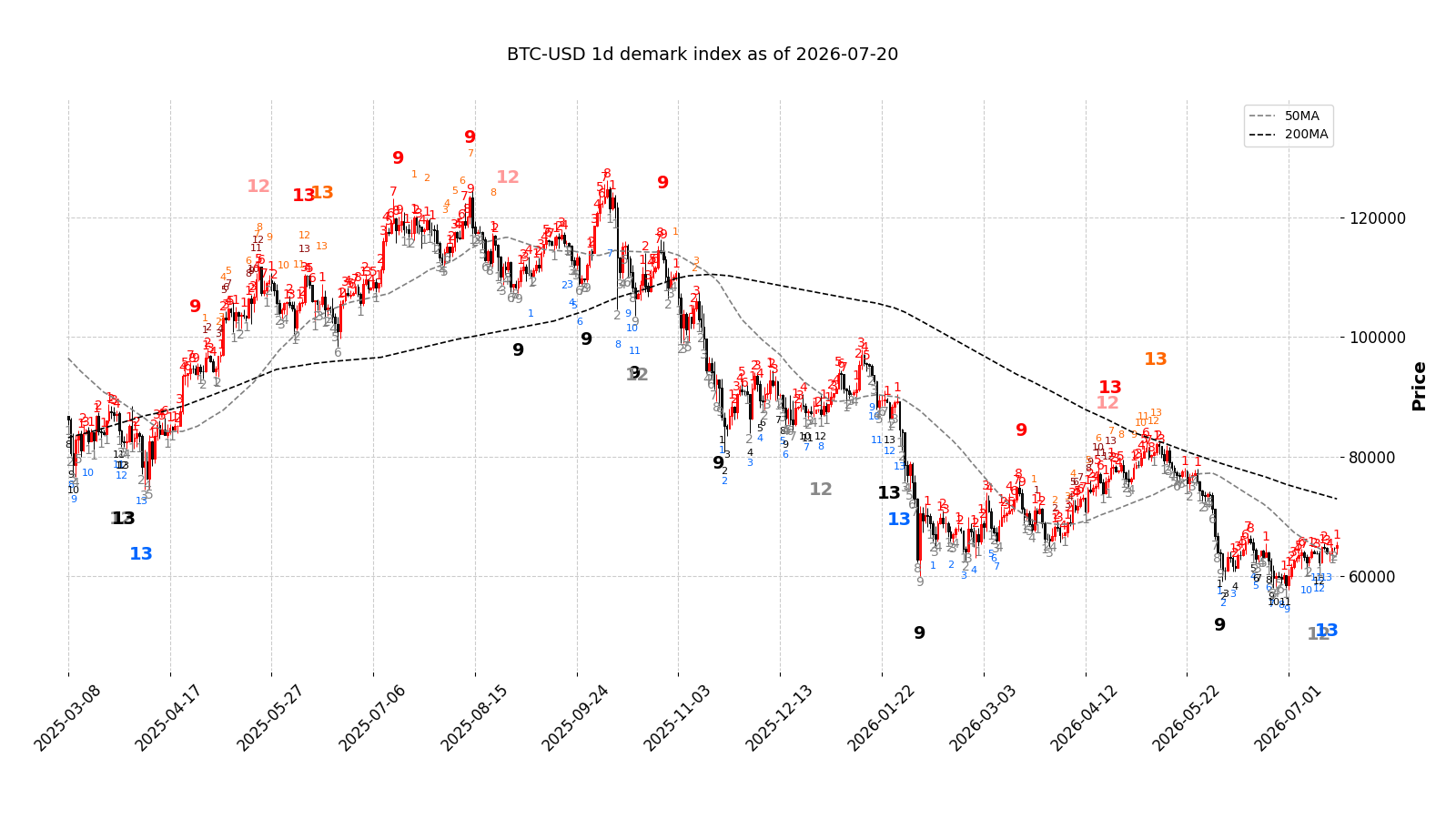
BTC Demark

  • BTC reclaimed $80,000, supported by dovish Fed signals, declining rate-hike expectations, and the return of institutional demand.
  • U.S. spot Bitcoin ETFs recorded $101 million in net inflows, their first positive flow in several weeks. The shift suggests sidelined capital is moving back into the market rather than merely covering shorts.
  • MicroStrategy continues aggressive accumulation, now reporting 845,050 BTC valued at approximately $68.5 billion. Corporate treasury demand remains a structural bid, but also increases concentration risk.
  • Standard Chartered launched spot BTC and ETH trading for institutional clients in the UAE, while Hargreaves Lansdown opened access to Bitcoin and Ether ETNs for U.K. retail investors.
  • The breakout improves momentum and reinforces the institutional-adoption narrative, but geopolitical inflation risk could challenge the move if oil and rates rise sharply.

ETHEREUM & L2 ECOSYSTEM

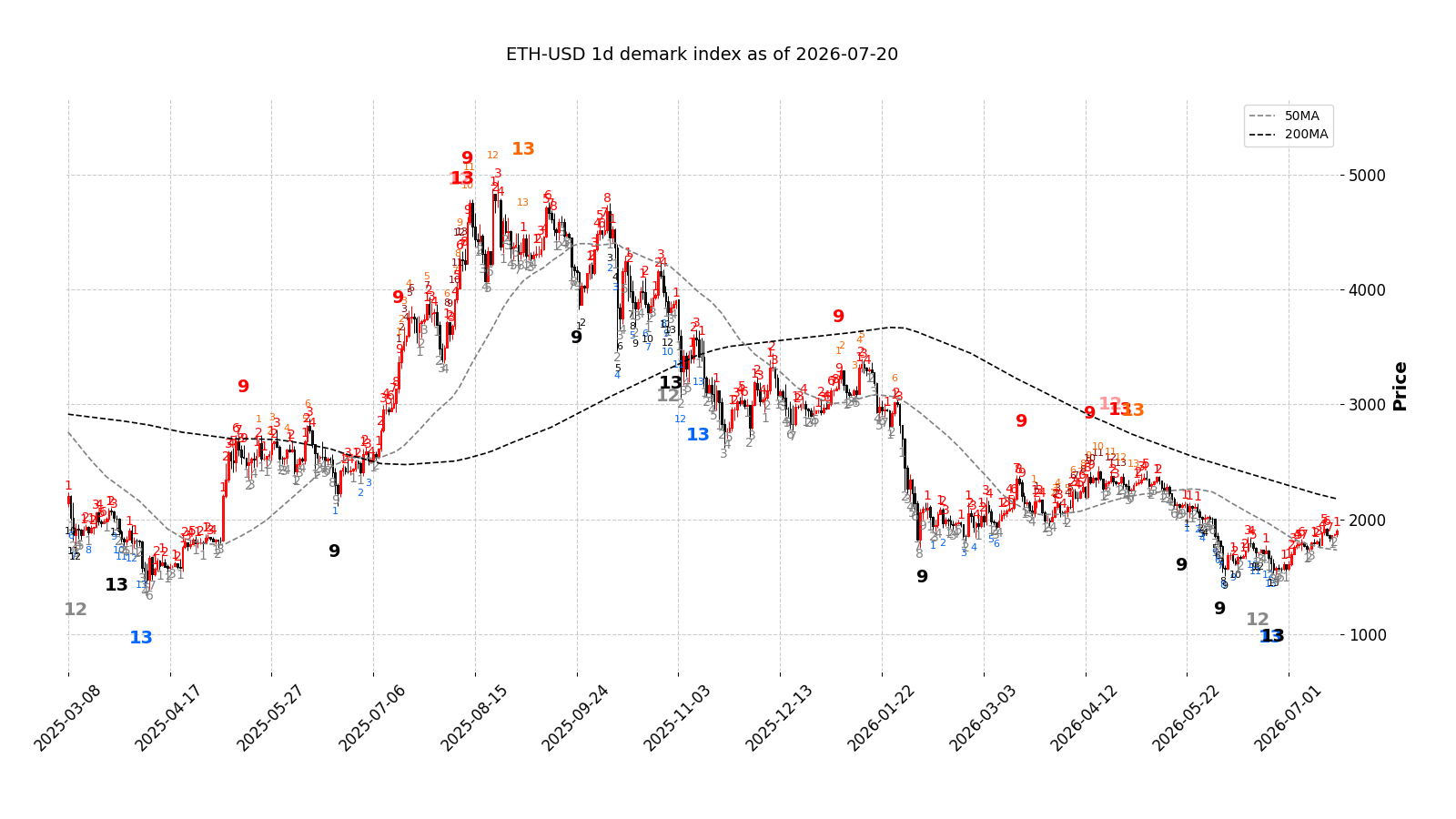
ETH Demark

  • Standard Chartered’s launch of spot ETH trading alongside BTC for institutional clients in the UAE strengthens Ethereum’s position within regulated institutional market infrastructure.
  • SoFi’s partnership with Kraken to integrate crypto liquidity adds another traditional-finance distribution channel for major assets, including ETH.
  • No material Arbitrum, Optimism, Base, fee-market, or L2 upgrade catalyst was reported today.

SOLANA ECOSYSTEM

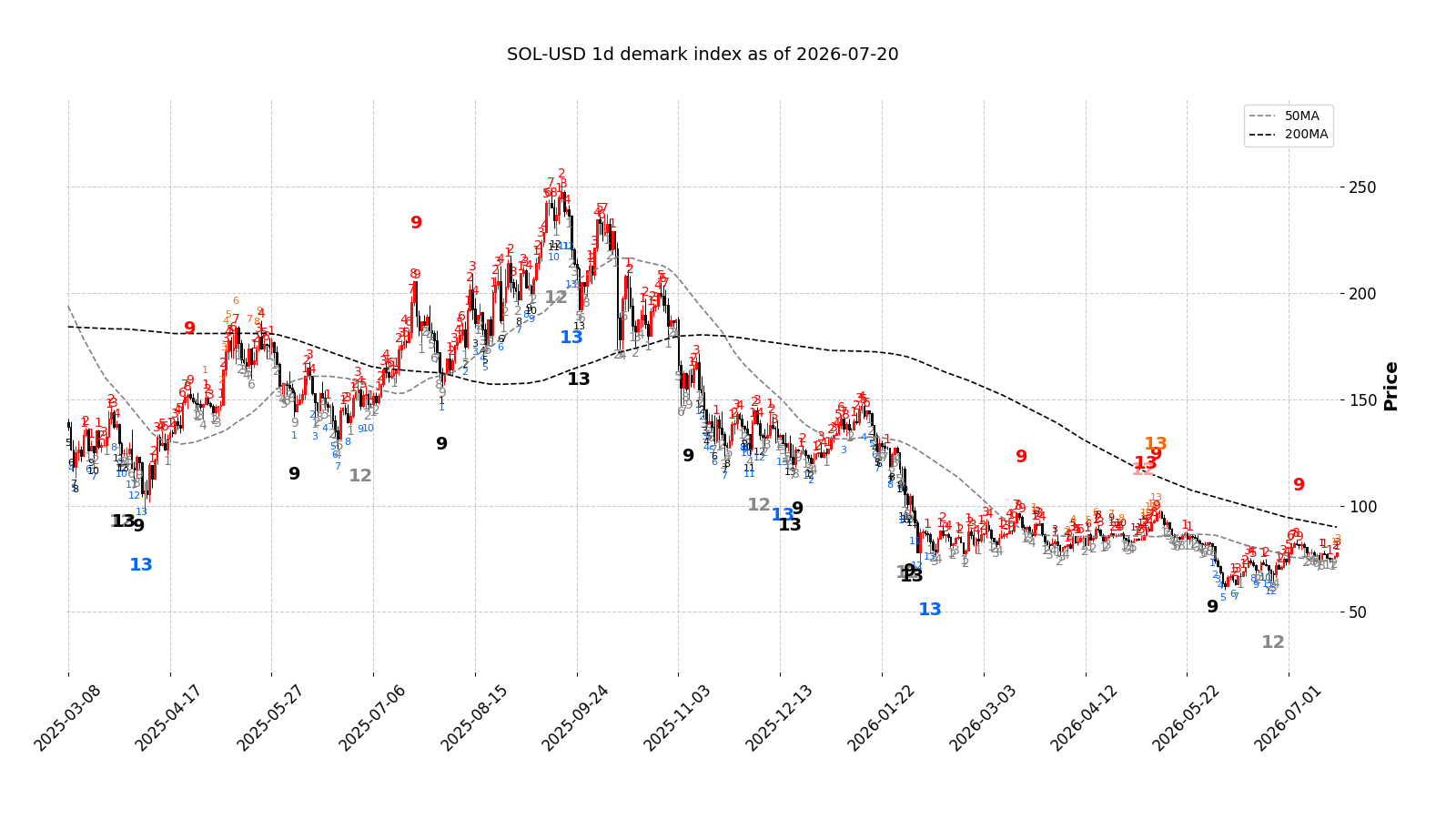
SOL Demark

  • SOL is consolidating after a rapid move from approximately $76 to nearly $110, with price around $99.43.
  • The broader structure remains constructive after reclaiming the 200-day EMA near $90.47. The $100 level is the immediate inflection point: sustained defense would support continuation, while a breakdown could expose the $90–$92 support zone.
  • RSI has cooled to roughly 62 from overbought levels, implying orderly consolidation rather than clear trend failure.
  • A break above $102–$104 would reopen the path toward $115–$120; failure to hold $100 would increase near-term volatility.

STABLECOINS & LIQUIDITY

  • Goldman Sachs and Bank of America are reportedly planning a U.S. dollar-backed stablecoin joint venture by mid-2027, backed by 21 major institutions.
  • The initiative would bring bank-issued settlement liquidity directly into blockchain markets, but it faces regulatory, adoption, and distribution hurdles.
  • Established issuers retain a major first-mover advantage: USDT circulation is reported near $180 billion. The proposed bank stablecoin is therefore a long-term competitive threat, not an immediate liquidity replacement.
  • No material peg stress or depeg event was reported for USDT, USDC, or DAI.

ALTCOINS & SECTORS

  • XRP: Institutional interest is accelerating. XRP was the most inquired-about asset among 400 wealth managers, while U.S. spot XRP ETFs reportedly generated $1.68 billion in cumulative inflows and Goldman Sachs disclosed an $87.4 million exposure. The BIS’s exploration of the XRP Ledger for tamper-proof economic-data records adds infrastructure credibility, though it is not a direct endorsement of XRP as a payment asset.
  • DOGE: Technical momentum remains weak after rejection near the 200-day EMA around $0.0945. A break below $0.080 could accelerate downside toward $0.075 and $0.070; recovery requires a move back above $0.094–$0.095.
  • FIL: FIL rebounded from roughly $0.65 to $0.77 and reclaimed its 20-day and 50-day EMAs on stronger volume. A daily close above $0.80 would confirm a more durable reversal; rejection risks a pullback toward $0.72 and potentially $0.65–$0.67.
  • ZEC: ZEC remains one of the strongest altcoin trends, holding near $811 after breaking out from the $450–$520 range. Sustained acceptance above $880–$890 could open a move toward $1,000, while $775–$780 is the first meaningful support.
  • RWA and institutional infrastructure: BIS work on XRPL, Broadridge’s expansion of distributed-ledger repo to G7 securities, and Figure’s blockchain-powered lending platform reinforce the shift from speculative tokens toward tokenized financial-market infrastructure.
  • Crypto infrastructure: Core Scientific continues expanding data-center capacity despite current losses, while Robinhood reportedly generated a record $4.32 million in single-day transaction revenue on its chain—evidence that exchange and settlement infrastructure is becoming a standalone revenue sector.
  • Memecoins: Doginal Dogs illustrates continued grassroots activity around Dogecoin-linked culture, but the broader DOGE price structure remains technically vulnerable.

REGULATORY & MACRO

  • Dovish Fed rhetoric and falling rate-hike expectations are supporting BTC, ETF inflows, and broader crypto risk appetite.
  • Traditional-finance integration is accelerating through Standard Chartered’s institutional trading launch, Hargreaves Lansdown’s ETN access, and SoFi’s Kraken liquidity partnership.
  • The House Republicans’ early adjournment threatens to delay the CLARITY Act, leaving U.S. market-structure uncertainty unresolved and potentially pushing legislative action into a volatile lame-duck period.
  • The BIS’s XRPL data-verification proof of concept is a meaningful institutional signal for distributed ledgers, but it should be treated as technology validation rather than token endorsement.
  • Geopolitical escalation in the Persian Gulf and threats to the Strait of Hormuz have driven oil and diesel prices higher. The resulting inflation risk could lift yields and the dollar, creating a near-term macro headwind for high-beta altcoins.

POSITIONING IDEAS

Bullish

  • BTC: Long bias on sustained acceptance above $80,000. The combination of positive spot ETF flows, dovish Fed expectations, and corporate accumulation provides the clearest large-cap catalyst.
  • XRP: Constructive bias while ETF inflows and wealth-manager demand remain persistent. BIS experimentation with XRPL adds institutional-infrastructure credibility, though positioning should distinguish ledger adoption from direct XRP demand.
  • ZEC: Momentum-long setup above $850, with a breakout through $880–$890 targeting the $900–$1,000 zone. Volume-backed consolidation and strong relative performance support continuation.
  • SOL: Buy-the-dip bias if $SOL holds $100 and especially the $90–$92 support range. A break above $102–$104 would confirm renewed upside momentum.

Bearish

  • DOGE: Short bias on a decisive break below $0.080. The failed recovery at the 200-day EMA and lack of buying conviction create a clear path toward $0.075 and $0.070.
  • High-beta altcoins: Maintain selective downside exposure if geopolitical inflation pushes rates and the dollar higher. The macro shock would likely pressure weaker tokens before it materially affects BTC.
  • FIL: Avoid chasing the rebound into $0.80. A failed breakout would invalidate the reversal setup and expose $0.72, with deeper risk toward $0.65–$0.67.

This content is for informational purposes only and does not constitute financial, investment, or trading advice. Always consult a qualified financial professional before making any investment decisions.

Daily Crypto Pulse

CRYPTO OVERVIEW

Crypto is trading in risk-off mode: rising bond yields, higher oil prices, and growing expectations for tighter Fed policy are pressuring BTC and ETH, while geopolitical stress is amplifying cross-asset volatility. The most consequential structural catalyst is institutional adoption of public-blockchain infrastructure, led by a 21-bank consortium planning a dollar stablecoin and accelerating bank-led settlement networks.

BITCOIN

BTC Demark

  • BTC fell below $77,000 after a 25% August rally. The reversal reflects a macro squeeze driven by higher yields, oil prices, and Fed rate-hike expectations.
  • August’s rally was supported by more than $3.5 billion in net spot Bitcoin ETF inflows, but today’s price action suggests that macro positioning is temporarily overpowering institutional demand.
  • MicroStrategy maintains a highly aggressive treasury strategy, with CEO Phong Le describing a two-way approach of selling BTC to strengthen the balance sheet and repurchasing at higher levels. The company reportedly holds 845,000 BTC, reinforcing its long-term bullish posture but adding balance-sheet and leverage sensitivity to the trade.
  • The company’s $260,000 BTC valuation thesis signals continued institutional conviction, although it does not offset the near-term impact of rates and risk-off positioning.

SOLANA ECOSYSTEM

SOL Demark

  • SOL is gaining regulatory traction as the Crypto Council for Innovation and Andreessen Horowitz advocate for its inclusion in spot exchange-traded products.
  • Potential spot SOL products would broaden institutional access and improve the asset’s policy legitimacy, but the catalyst remains advocacy rather than an approved product or confirmed flows.

STABLECOINS & LIQUIDITY

  • A consortium of 21 major financial institutions, including JPMorgan, Goldman Sachs, Bank of America, and UBS, plans to launch a U.S. dollar-denominated stablecoin by early 2027 and deploy it on public blockchains.
  • The initiative directly challenges USDC, which has approximately $73.3 billion in circulation and derives about 95% of revenue from reserve income. Institutional distribution and regulatory credibility could pressure Circle’s long-term market-share position.
  • Tether’s freezing of $4.2 billion across 10 Ethereum addresses is intensifying the debate over issuer discretion and centralized censorship in DeFi. The case alleges that the freeze followed an informal law-enforcement request without a court order; its outcome could establish whether stablecoin issuers can unilaterally restrict funds acquired through secondary markets.
  • RLUSD supply has reached approximately $539 million, representing 34% of the reported XRP ecosystem stablecoin supply. The growth supports liquidity expansion around the XRP Ledger, although issuer concentration remains a key risk.
  • JPMorgan’s Kinexys platform has processed more than $4 trillion in transactions, while Citi, DBS, and UOB are conducting live activity on Swift’s blockchain-based ledger. These developments point to accelerating institutional settlement demand rather than immediate speculative liquidity growth.

ALTCOINS & SECTORS

  • XRP: The XRP Ledger’s daily transaction volume is approaching one million, including a reported 33.6% increase on September 1. Binance outflows of hundreds of millions of XRP suggest whale or institutional accumulation, while price remains near $1.32 and below the $1.35 200-day EMA. The divergence between stronger network activity and stagnant price is constructive for long-term adoption but remains a near-term warning for bulls.
  • XRP / institutional infrastructure: The BIS is reportedly exploring the XRP Ledger as a verification layer for global economic data. Evernorth’s planned Nasdaq debut through the XRPN merger could add further institutional visibility to the ecosystem.
  • DOGE: DOGE failed at the 200-day EMA and lost the 100-day EMA near $0.0816, confirming a deterioration in trend structure. A daily close below $0.080–$0.082 would expose $0.0752, followed by the $0.069–$0.072 consolidation zone.
  • Cardano / DeFi: Cardano ranks around 36th in TVL and continues to lag in stablecoin liquidity, RWA tokenization, and DeFi activity. The absence of a clear institutional or ecosystem catalyst leaves ADA structurally weaker than ETH and SOL.
  • RWA and tokenization: Federated Hermes launched a regulated tokenized fund in APAC, while SAP, Everledger, and Circularise are expanding blockchain-based digital product passports. The strongest institutional use case today is shifting toward tokenized funds, payments, verification, and supply-chain infrastructure rather than retail speculation.

REGULATORY & MACRO

  • Geopolitical escalation around the Strait of Hormuz and Iran’s threats to shipping lanes are tightening diesel and broader energy markets. ICE gasoil cracks have reached $79 per barrel, while U.S. diesel cracks exceed $100, raising the risk of renewed inflation pressure.
  • Russia’s diesel-export ban and attacks on regional refining infrastructure are compounding supply constraints. Higher energy and food prices could keep rates elevated and extend the headwind for crypto beta.
  • The combination of higher oil, rising yields, and stronger Fed-tightening expectations is the dominant cross-asset driver. It has pushed BTC below $77,000 and ETH toward $2,376, while increasing the probability that rallies in high-beta altcoins will be sold.
  • Bank-led stablecoin and blockchain-settlement initiatives are accelerating institutional integration. Circle is calling for U.S. leadership through the GENIUS Act, while the Tether litigation could define the legal limits of stablecoin issuer freezes.
  • Citi’s live blockchain-ledger transactions and JPMorgan’s Kinexys adoption show that regulatory-grade distributed infrastructure is moving into production, even as speculative crypto assets remain macro-sensitive.

POSITIONING IDEAS

Bullish

  • XRP: Accumulation signals, near-million daily ledger transactions, rising RLUSD supply, and potential institutional use as a verification layer support a medium-term long bias. The key confirmation is a sustained break above the $1.35 200-day EMA.
  • SOL: Advocacy for spot SOL ETPs from major policy and venture institutions supports a regulatory-convergence trade. Position sizing should reflect that approval and ETF flows remain unconfirmed.
  • Tokenization and institutional settlement: Regulated tokenized funds, Kinexys activity, and Swift’s blockchain ledger support a long-term bias toward infrastructure providers and assets tied to RWA and payment adoption.

Bearish

  • DOGE: A confirmed close below $0.080–$0.082 would validate the breakdown below key moving averages and expose $0.0752, with further downside toward $0.069–$0.072.
  • ADA / Cardano DeFi: Low TVL, weak stablecoin depth, limited RWA activity, and no clear ETF catalyst support relative underperformance versus ETH, SOL, and institutional-infrastructure themes.
  • High-beta crypto broadly: Higher yields, oil-driven inflation risk, and Fed-tightening expectations favor selling speculative rallies until macro pressure eases. BTC ETF inflows remain a counterweight, but they have not prevented the current risk-off reversal.

This content is for informational purposes only and does not constitute financial, investment, or trading advice. Always consult a qualified financial professional before making any investment decisions.

Daily Crypto Pulse

CRYPTO OVERVIEW

Crypto is trading in a selective risk-on rotation rather than a broad-based rally: SOL and XRP are attracting flows while BTC remains relatively sidelined. The dominant macro catalyst is the escalation of U.S.–Iran tensions, which pushed Brent crude above $92 and raised broader risk-off and inflation concerns; the key structural countertrend is accelerating institutional tokenization by NYSE/ICE, LSEG, and crypto-native venues.

BITCOIN

BTC Demark

  • Strive purchased 1,800 BTC for $143 million at an average $79,431, lifting its holdings to 23,156 BTC worth approximately $1.76 billion. The transaction reinforces corporate-treasury demand, although it reflects strategic accumulation rather than speculative capitulation.
  • BTC is underperforming the current altcoin narrative, with attention shifting toward SOL and XRP despite Bitcoin holding near $78,000 amid rising bond yields.
  • Bitcoin’s adoption base continues to expand, with estimates exceeding 500 million holders globally. However, declining cycle multiples and weaker speculative breadth make extreme upside targets such as $250,000 less credible without a renewed liquidity impulse.
  • A concurrent $432 million BTC monetization sale highlights the maturing treasury model: institutions are accumulating exposure while actively managing liquidity rather than simply holding indefinitely.

ETHEREUM & L2 ECOSYSTEM

ETH Demark

  • ETH recovered to approximately $2,460 but faces resistance near $2,554, where the 100-week EMA and a concentrated liquidity zone could limit follow-through.
  • A failure at that level would expose an estimated $3.79 billion in long liquidations around $1,760, underscoring the leverage embedded in the recovery.
  • Robinhood Chain reportedly leads Ethereum’s L2 ecosystem in volume, signaling strong demand for consumer-facing tokenized assets and trading infrastructure. The development is constructive for L2 adoption but also intensifies competition among Arbitrum, Optimism, Base, and newer distribution-led chains.
  • Ethereum’s relative positioning is weakening as capital rotates toward higher-beta assets and tokenization platforms. A sustained ETH recovery requires a decisive break above $2,554 rather than another leveraged bounce.

SOLANA ECOSYSTEM

SOL Demark

  • SOL rallied 40%–50% in August and posted its first bullish monthly close after a nearly year-long losing streak, recovering from roughly $60 toward the $100–$110 zone.
  • A dormant whale resumed buying with an $8 million SOL purchase, supporting the view that larger players are re-engaging with the ecosystem.
  • SOL futures volume reached $7.82 billion versus $738 million in spot volume, while open interest approached $6.64 billion. The imbalance makes the rally highly vulnerable to liquidation-driven reversals.
  • $100 has shifted from resistance to psychological support, but momentum is fading: RSI has cooled, breakout volume has declined, and SOL needs a high-volume move above $110 to extend the trend.
  • SOL and XRP ETFs recorded record inflows, pointing to institutional rotation into higher-growth assets rather than purely retail-led speculation.

STABLECOINS & LIQUIDITY

  • Ripple USD (RLUSD) surpassed $2 billion in issuance, with more than half minted on the XRP Ledger. Growth in emerging-market partnerships and approximately $50 million deposited in Bybit’s Hold & Earn program indicate expanding distribution and utility.
  • RLUSD’s expansion strengthens the XRP Ledger payments and tokenization narrative, but issuance growth should not be treated as a direct proxy for XRP demand or price appreciation.
  • SoFi is also developing SoFiUSD, reflecting the broader convergence between consumer finance platforms and stablecoin infrastructure.
  • No major peg instability or redemption stress was reported across leading stablecoins.

ALTCOINS & SECTORS

  • XRP: Ripple integrated SettleMint’s Digital Asset Lifecycle Platform, offering institutions a broader tokenized-asset management stack. On-chain activity is increasingly concentrated between 13:00 and 16:00 UTC, with that “rush hour” accounting for 23.5% of weekday activity. The pattern suggests greater alignment with institutional trading hours.
  • XRP: The monthly release of 1 billion XRP remains a limited near-term supply catalyst because Ripple has historically re-escrowed most unlocked tokens. The asset’s 30.8% 30-day rally and $2.3 million in liquidations indicate that positioning remains vulnerable despite the stronger utility narrative.
  • DOGE: MyDoge plans to discontinue support for Doginals and DRC-20 assets by September 17, 2026, following Maestro’s Dogecoin API shutdown. DOGE itself is unaffected, but the event exposes a material infrastructure and phishing risk for holders of ecosystem extensions.
  • DeFi/Web3: Roundtable’s “Roundtable 100” uses a DeFi-enabled platform to connect traditional technology investing with AI, fintech, and Web3 infrastructure. The signal is primarily strategic rather than an immediate token catalyst.
  • Tokenization: ICE’s investment in tZERO and LSEG’s partnership with Kraken to tokenize UK equities represent the most consequential sector development. Institutional adoption is moving toward blockchain-based clearing, settlement, collateral, and 24/7 market access.
  • Mining infrastructure: Riot remains exposed to high valuation and financing risk, while Applied Digital’s losses, leverage, and limited cash runway make the equity a fragile proxy for crypto infrastructure demand.

REGULATORY & MACRO

  • Geopolitical risk is the dominant cross-asset driver. U.S.–Iran hostilities and uncertainty around the Strait of Hormuz lifted Brent above $92 and introduced a significant energy and inflation premium.
  • The IEA expects a potential 1.8 million barrel-per-day global oil deficit in Q3 2026, increasing pressure on rates and risk assets if elevated energy prices persist.
  • BTC’s resilience near $78,000 despite rising bond yields suggests improving defensive characteristics, but the current macro backdrop remains unfavorable for broad speculative beta.
  • ICE’s tZERO investment and LSEG’s tokenized-stock initiative show that regulated institutions are increasingly building blockchain rails directly into market infrastructure. This is a longer-duration adoption catalyst for tokenization, stablecoins, and settlement networks.
  • Binance’s U.S.-stock options offering, Robinhood Chain’s volume growth, and Hyperliquid’s 3.36% weighting in the Nasdaq CME Crypto Index point to accelerating institutionalization of crypto-native market structure, even as U.S. regulatory constraints remain.

POSITIONING IDEAS

Bullish

  • SOL: Maintain a tactical long bias while $100 holds, with confirmation only on a volume-backed break above $110. The catalysts are renewed whale accumulation, record ETF inflows, and the first bullish monthly close in nearly a year.
  • XRP / XRP Ledger: Constructive medium-term bias based on RLUSD surpassing $2 billion, SettleMint integration, and increasingly institution-aligned trading activity. Near-term entries should account for the 30.8% monthly rally and elevated liquidation risk.
  • Tokenization infrastructure: Favor exchanges, settlement platforms, and blockchain rails tied to institutional market modernization. ICE/tZERO and LSEG/Kraken provide stronger fundamental support than purely speculative DeFi narratives.
  • BTC: Selective accumulation remains supported by Strive’s $143 million purchase and continued corporate-treasury adoption, particularly if geopolitical volatility sustains demand for scarce reserve assets.

Bearish

  • SOL leveraged longs: The futures-to-spot volume imbalance and $6.64 billion open interest create substantial liquidation risk. A break below $100 would weaken the current recovery structure.
  • ETH: Failure to reclaim $2,554 would keep the 100-week EMA as overhead resistance and could activate a large long-liquidation cascade.
  • DOGE ecosystem extensions: Doginals and DRC-20 assets face a clear infrastructure sunset and possible liquidity impairment. Avoid exposure to unsupported migration claims and associated speculative derivatives.
  • Broad crypto beta: Sustained oil inflation and rising yields could pressure high-beta altcoins even if tokenization and institutional adoption remain structurally positive.

This content is for informational purposes only and does not constitute financial, investment, or trading advice. Always consult a qualified financial professional before making any investment decisions.

Daily Crypto Pulse

CRYPTO OVERVIEW

Crypto is in risk-on mode, led by institutional demand for BTC and broadening participation across XRP, SOL, and other large-cap assets. The dominant catalyst is the record $1.92 billion weekly inflow into U.S. spot Bitcoin ETFs, reinforced by a $6.55 billion short squeeze; however, escalating U.S.–Iran tensions and Brent crude above $90 introduce a clear geopolitical risk to the rally.

BITCOIN

BTC Demark

  • Institutional flows are the session’s strongest bullish signal: U.S. spot Bitcoin ETFs recorded $1.92 billion in weekly inflows, the highest level since October 2025.
  • Leverage has accelerated the move. A reported $6.55 billion short squeeze confirms aggressive upside positioning but also raises near-term overheating risk.
  • MicroStrategy resumed accumulation, purchasing 4,603 BTC for approximately $370 million at $80,318 after a two-month pause. The purchase reinforces the company’s role as a corporate floor buyer, despite its earlier $432 million BTC sale under its monetization program.
  • Macro conditions remain supportive: Treasury long-dated bond buybacks, a weaker dollar, and renewed U.S. regulatory optimism have strengthened BTC’s macro-hedge narrative.
  • BTC’s 32.48% Q3 advance is far above its historical 7.94% average, suggesting a possible transition out of the prior bear-market regime—but the speed of the move leaves the market vulnerable to a positioning-driven pullback.

STABLECOINS & LIQUIDITY

  • Ripple’s RLUSD surpassed $2 billion in market capitalization, with more than $1 billion circulating on the XRP Ledger. That gives the XRP ecosystem a growing native liquidity base.
  • An 11 million RLUSD swap completed in under two hours, highlighting throughput and settlement capacity on the XRP Ledger.
  • RLUSD activity creates indirect demand for XRP through transaction fees and fee burns, although the near-term price impact depends on sustained transaction growth rather than one-off volume.
  • Ripple’s proposed clawback functionality and validator-led lending framework point to a compliance-oriented stablecoin and credit strategy aimed at institutional users.

ALTCOINS & SECTORS

  • XRP: Institutional infrastructure is the strongest altcoin catalyst. Validator voting on XLS-65 and XLS-66, partnerships with Clearpool and Cicada Partners, and the potential pursuit of a Fed master account via Standard Custody could reduce regulatory and settlement barriers. $110 million in weekly XRP ETF inflows and a reported breakout above resistance add to the bullish setup.
  • AVAX: Binance’s removal of AVAX/BTC from isolated-margin trading is a short-term liquidity and sentiment negative. Spot trading remains available, but forced deleveraging and the risk of similar exchange actions could keep AVAX under pressure.
  • LINK: Binance also removed LINK/BTC from isolated and cross-margin platforms. This does not impair Chainlink’s fundamentals, but it reduces leveraged liquidity and creates a near-term volatility risk around the delisting date.
  • SHIB: Exchange outflows rose 79%, with 312.75 billion SHIB reportedly moving off trading venues. The flow is consistent with whale accumulation, but SHIB still needs to reclaim the 200-day moving average near $0.00000570 to confirm a technical reversal.
  • DeFi: 1inch launched Aqua across 13 EVM chains, allowing the same wallet liquidity to support multiple positions without locking tokens into isolated pools. If adoption scales, Aqua could improve capital efficiency, reduce slippage, and pressure conventional concentrated-liquidity models.
  • RWA and institutional blockchain: Tokenized Treasuries, on-chain credit, and enterprise blockchain infrastructure continue to attract institutional attention. BlackRock’s BUIDL, ICE’s tZERO partnership, and Figure’s credit platforms support a structural shift toward tokenized financial markets.

REGULATORY & MACRO

  • ETF demand and corporate accumulation are validating crypto as an institutional allocation, with BTC above $80,000 and renewed optimism around the stalled CLARITY Act.
  • A potential Senate vote on the CLARITY Act remains a key catalyst for XRP, particularly if the legislation clarifies its treatment as a digital commodity.
  • Treasury bond buybacks and dollar weakness have supported risk assets, while Bitcoin’s correlation with macro liquidity remains favorable.
  • Geopolitical risk is the main counterweight: U.S.–Iran military escalation around the Strait of Hormuz pushed Brent crude above $90. A sustained oil shock could lift inflation expectations, delay rate relief, and undermine the broader risk-on trade.
  • The blockchain investment narrative is shifting from speculative tokens toward tokenized assets, settlement, stablecoins, and institutional lending. Ripple’s lending proposals are a notable example, but deployment and regulatory approval remain execution risks.

POSITIONING IDEAS

Bullish

  • BTC: Maintain a bullish bias while ETF inflows remain elevated. The combination of record spot demand, MicroStrategy’s renewed purchase, and short-covering supports continuation, though entries should account for crowded positioning.
  • XRP: Favor tactical long exposure on confirmed support above the reported breakout zone. Catalysts include RLUSD growth, XRP ETF inflows, validator approval of XLS-65/XLS-66, and potential CLARITY Act progress.
  • XRP Ledger liquidity infrastructure: RLUSD adoption and Ripple’s institutional lending roadmap support a longer-term bullish view on the ecosystem, provided stablecoin activity converts into recurring transaction and credit demand.
  • DeFi liquidity infrastructure: 1inch Aqua offers a constructive thematic long for shared-liquidity and capital-efficiency protocols if deployment produces measurable volume migration.

Bearish

  • AVAX: Short-term bearish bias is justified by Binance’s margin-pair delisting, potential forced deleveraging, and the risk of additional exchange liquidity reductions. Spot availability limits the immediate downside case but does not remove the sentiment shock.
  • LINK: Maintain a cautious short-term stance around Binance’s margin delisting and the resulting reduction in leveraged liquidity. The trade is tactical rather than a fundamental bearish call on Chainlink.
  • BTC leverage: Avoid chasing upside after the $6.55 billion short squeeze and unusually strong quarterly gain. A reversal in ETF flows, a stronger dollar, or an oil-driven macro risk-off move could trigger a sharp long liquidation.

This content is for informational purposes only and does not constitute financial, investment, or trading advice. Always consult a qualified financial professional before making any investment decisions.

Daily Crypto Pulse

CRYPTO OVERVIEW

Crypto is trading in a selective risk-on mode, led by SOL’s breakout above its 200-day moving average and strong ETF-related interest in XRP. The key session catalyst is the shift in long-term BTC wallet activity: more than 2,500 coins dormant since 2011–2012 moved this week, creating a potentially bullish positioning signal but also meaningful latent supply risk if funds reach exchanges.

BITCOIN

BTC Demark

  • More than 2,500 BTC from wallets dormant since 2011–2012 moved in a single week, marking an unusually significant change in long-term holder behavior.
  • The transfers do not confirm selling. They may reflect strategic repositioning ahead of a rally, but the coins carry unrealized gains above 600,000%, making exchange inflows the key risk variable.
  • If the coins remain off-exchange, the activity supports a bullish interpretation of renewed conviction among early holders. Exchange deposits would instead raise volatility and near-term supply risk.

SOLANA ECOSYSTEM

SOL Demark

  • SOL broke above its 200-day moving average near $90.18 on rising volume, confirming a stronger technical reversal than recent speculative rallies in weaker assets.
  • The move from roughly $75 to $104.65 represents an increase of nearly 45%. Momentum remains strong, but an RSI near 73.4 and softer recent volume leave the market vulnerable to consolidation.
  • $111 is the immediate support test. Holding that level would preserve a path toward $115–$120; failure could send SOL toward $100 or the breakout zone near $90.
  • The breakout makes SOL a relative leader, particularly against assets still trading below their long-term trend averages.

ALTCOINS & SECTORS

  • XRP: XRP ETFs hold approximately $1.44 billion in net assets, led by Bitwise’s product at $632 million. Demand is substantial, but the asset lacks native staking yield, limiting ETF differentiation versus yield-bearing SOL products.
  • XRP: The pending XRPL Lending Protocol could address the yield gap, but validator approval remains outstanding. Until then, XRP ETF growth depends primarily on spot demand rather than yield-driven allocations.
  • ETF yield theme: Yield is emerging as a key competitive advantage for crypto ETFs. Solana’s BSOL ETF reportedly reached $1 billion in AUM in 10 months, while XRP products remain below that threshold despite strong aggregate assets.

POSITIONING IDEAS

Bullish

  • SOL: Favor long exposure on successful holds above $111 or on a controlled retest of the $90–$100 breakout zone. The catalyst is a confirmed break above the 200-day moving average with strong prior volume and clear relative strength.
  • BTC: Maintain a cautiously bullish bias if dormant-wallet transfers remain off exchanges. Continued non-exchange movement would suggest strategic repositioning rather than immediate distribution.

Bearish

  • XRP relative to SOL: Favor a relative underweight or short XRP/SOL expression if XRP ETF flows remain stagnant. XRP lacks staking yield and still awaits XRPL Lending approval, while SOL already benefits from a yield-bearing ETF narrative and stronger price momentum.
  • BTC near-term supply risk: Treat sudden exchange deposits from the awakened 2011–2012 wallets as a bearish volatility trigger. The size and age of the holdings could create concentrated selling pressure if long-dormant coins begin liquidating.

This content is for informational purposes only and does not constitute financial, investment, or trading advice. Always consult a qualified financial professional before making any investment decisions.

Daily Crypto Pulse

CRYPTO OVERVIEW

Crypto is trading in a selective risk-on regime: institutional accumulation is supporting BTC, SOL, and XRP, while leverage and geopolitical stress keep downside risk elevated. The dominant catalyst is the upcoming U.S. Senate vote on the CLARITY Act on September 15, 2026, with a weekly BTC close above $82,000 serving as the key near-term technical confirmation.

BITCOIN

BTC Demark

  • BTC trades near $77,776 after reclaiming the $67,000 structural floor, the daily 200-day moving-average cluster, and the weekly 50-day EMA. Momentum is strong, with RSI above 85, but the trend remains unconfirmed.
  • The decisive level is a weekly close above $82,000, alongside a sustained break above the $79,000 Supertrend. Confirmation would open a path toward $90,000; rejection could produce a pullback toward $75,000.
  • BTC’s 90-day correlation with gold has risen above 50%, while its Nasdaq correlation has weakened, reinforcing a digital-gold and macro-hedge profile rather than a pure high-beta equity proxy.
  • Dormant wallets moved approximately 553 BTC, but the flow has not shown evidence of broad long-term-holder capitulation. That supports the view that the current advance reflects structural accumulation more than panic distribution.

ETHEREUM & L2 ECOSYSTEM

ETH Demark

  • ETH is benefiting from aggressive treasury accumulation by Bitmine Immersion Technologies, though the strategy relies on repeated stock issuance and has generated substantial book losses. The accumulation is bullish for marginal demand but raises balance-sheet sustainability risk.
  • No material L2 upgrade, fee, or DeFi-flow catalyst was provided today.

SOLANA ECOSYSTEM

SOL Demark

  • Bitwise’s Solana staking ETF, BSOL, has surpassed $1 billion in AUM, with $126 million in single-day volume and seven consecutive days of inflows. Cumulative Solana ETF inflows have reached $1.26 billion, equivalent to roughly 2.2% of SOL’s market capitalization.
  • DeFi Dev Corp. purchased another $1.86 million of SOL, bringing its holdings to 2.33 million SOL. The activity supports a strategic-accumulation narrative rather than short-term retail demand.
  • SOL futures volume is running near $14.6 billion versus $1.7 billion in spot, a roughly 10:1 leverage imbalance. That helped drive a 19% weekly rally but leaves the market vulnerable to liquidation cascades; the recent 2.25% decline is an early warning.
  • The proposed Double Disinflation plan, SGP-0002, would increase the annual burn rate from 15% to 30% and remove an estimated 18.9 million SOL over six years. The supply reduction is structurally bullish, but lower staking rewards could pressure yield-sensitive holders.

ALTCOINS & SECTORS

  • XRP: Institutional and regulatory momentum remains strong. Spot XRP ETFs have attracted $1.64 billion in net inflows, while XRP gained 35% in August and 37% in Q3. Passage of the CLARITY Act could establish XRP as a federally recognized commodity and remove a major adoption constraint.
  • XRP Ledger: The network has processed 5 billion transactions, and the XRPL Lending Protocol has completed a security audit. Ripple is also expanding its institutional footprint through Ripple Prime and the Delta One platform.
  • SHIB: More than 145 billion SHIB reportedly left exchanges as the token approached the critical $0.000005 support zone. In this context, exchange outflows appear consistent with stress and declining meme-coin liquidity rather than clear accumulation.
  • Institutional infrastructure: Charles Schwab’s inclusion of SOL, AVAX, and LINK in its crypto offering signals broader acceptance of large-cap alternative assets as financial infrastructure.

REGULATORY & MACRO

  • The September 15, 2026 Senate vote on the CLARITY Act is the market’s central regulatory event. Passage could clarify asset classifications, accelerate ETF approvals, and unlock institutional participation, with XRP positioned as the clearest direct beneficiary.
  • Coinbase launched Bitcoin-backed mortgages using Fannie Mae-backed loans, extending BTC integration from investment products into housing finance. The development strengthens the real-world collateralization narrative but introduces credit and regulatory execution risk.
  • The White House’s high-level crypto meeting and renewed discussion of a potential government Bitcoin reserve are adding political support to the sector, although claims regarding existing government holdings remain controversial.
  • Geopolitical escalation around the Strait of Hormuz is driving a major energy shock: restricted shipping has sharply increased oil and gas import costs, while damage to Middle Eastern refining capacity and higher LNG prices raise inflation and rates risk. A stronger inflation impulse would challenge leveraged crypto positioning even as it reinforces the hard-asset case for BTC.
  • U.S.-China restrictions on rare-earth supply chains are accelerating de-risking and industrial-policy concerns. The broader cross-asset backdrop is therefore mixed: supportive for scarce assets, but hostile to high-beta trades if energy inflation tightens financial conditions.

POSITIONING IDEAS

Bullish

  • BTC: Maintain a tactical long bias on a confirmed weekly close above $82,000. The setup combines improving technical structure, stronger gold correlation, and evidence of limited long-term-holder capitulation.
  • SOL: Favor SOL on institutional-flow strength and the potential passage of SGP-0002. Size positions below normal because the 10:1 futures-to-spot volume ratio makes the trade vulnerable to forced deleveraging.
  • XRP: XRP has the strongest event-driven upside into the CLARITY Act vote, supported by $1.64 billion in ETF inflows and improving institutional infrastructure. The trade is highly binary around the legislative outcome.

Bearish

  • SOL leverage: Short-term downside risk is concentrated in SOL futures. The large derivatives premium to spot and recent pullback create conditions for a liquidation-driven retracement if inflows slow.
  • SHIB and meme coins: Maintain a bearish bias toward SHIB while it remains near $0.000005 support and exchange activity signals narrative exhaustion. A break of that level could accelerate sector-wide de-risking.
  • High-beta crypto exposure: Geopolitical energy inflation and potential rate pressure argue for reducing unhedged altcoin leverage, particularly where rallies depend more on derivatives than spot demand.

This content is for informational purposes only and does not constitute financial, investment, or trading advice. Always consult a qualified financial professional before making any investment decisions.

Daily Crypto Pulse

CRYPTO OVERVIEW

Crypto remains macro-sensitive and selectively risk-on: Bitcoin’s rebound from $62,000 toward $80,000 and bullish options positioning contrast with renewed pressure after hawkish Federal Reserve commentary. The session’s most important crypto-native catalyst is Solana’s narrow approval of the SGP-0002 “Double Disinflation” proposal, which accelerates the path to lower issuance but raises concerns about staking economics and validator concentration.

BITCOIN

BTC Demark

  • Bitcoin remains tightly correlated with rates expectations. BTC briefly fell below $80,000 after hawkish remarks from Fed Chair Kevin Warsh, confirming that higher-rate expectations continue to pressure crypto beta.
  • The broader recovery from roughly $62,000 to $80,000 was driven in part by a large short squeeze and leveraged liquidations. Bullish options data suggests traders still expect upside, but the rebound remains vulnerable to another macro-driven deleveraging wave.
  • The Bitcoin treasury-stock model is under pressure. MicroStrategy’s potential exclusion from MSCI indexes could force reassessment or selling across BTC-linked corporate vehicles, exposing the fragility of balance-sheet strategies that lack operating revenue.
  • Crypto miners continue shifting toward AI infrastructure. IREN’s move into AI data centers, despite reported losses of $684 million, reflects a broader capital reallocation from mining toward compute demand rather than a direct change in BTC network fundamentals.

ETHEREUM & L2 ECOSYSTEM

ETH Demark

  • No material Ethereum- or L2-specific development was reported today.

SOLANA ECOSYSTEM

SOL Demark

  • Solana’s SGP-0002 proposal narrowly passed, accelerating the end of the current inflation schedule from 2032 to 2029 and targeting a 1.5% terminal inflation rate. The change would remove or avoid approximately 18.9 million SOL of future supply, worth roughly $1.5 billion at the cited valuation.
  • The vote passed with only about a 67% approval margin, following a late reversal by Kraken under community pressure. That result demonstrates meaningful validator and retail influence but also highlights governance fragility.
  • The proposal is bullish for SOL scarcity, collateral value, and long-term DeFi positioning. The trade-off is lower staking rewards, which could pressure smaller validators and increase centralization risk.
  • SGP-0003, the separate proposal to increase fee burns to roughly 9,000 SOL per day, failed. Solana’s community therefore supports lower issuance but not an equally aggressive burn regime.

STABLECOINS & LIQUIDITY

  • More than 12 global banks are reportedly preparing stablecoins for public blockchains. Institutional issuance is accelerating, but the GENIUS Act’s yield restrictions could limit adoption versus composable stablecoins such as USDC, USDT, and OUSD.
  • Visa’s partnership with Dunamu and the OUSD consortium signals a push toward bank- and payments-led stablecoin infrastructure in Asia. The strategy excludes Circle and Tether from that ecosystem, increasing competitive pressure on incumbent issuers.
  • Circle’s stock fell 13–17% after the announcement, indicating that equity investors view bank-backed, open-chain stablecoins as a credible competitive threat. No material stablecoin depeg was reported.

ALTCOINS & SECTORS

  • BNB: BNB broke above the long-standing $647 resistance and moved above $700, trading near $706. The structure remains strongly bullish, but an RSI near 80 and fading candle size near $700–$720 point to near-term exhaustion. A break above $720–$730 would target $760–$800; loss of $680, and especially $640–$650, would invalidate the breakout.
  • XRP: Evernorth’s merger with Armada Acquisition Corp. II received SEC approval and will list on Nasdaq under XRPN. The deal creates a regulated institutional gateway to XRP, but Evernorth’s balance sheet remains highly exposed to XRP volatility after a reported $233.7 million impairment and a 70%+ decline from the merger’s assumed XRP price.
  • DOGE: DOGE is testing the $0.090 resistance in a bullish flag. A confirmed close above that level could open a move toward $0.115, while a break below $0.081 would invalidate the setup and expose $0.056–$0.060. With RSI near 67 and long-term resistance at $0.095–$0.10, the current move remains a speculative rebound rather than a confirmed trend reversal.
  • SOL/AI infrastructure: Bullish’s $100 million investment in USD.AI is an important RWA/DeFi crossover, tokenizing GPU capacity as an on-chain, yield-bearing asset. The theme links crypto liquidity to AI infrastructure demand rather than purely financial speculation.
  • Exchange and brokerage adoption: Charles Schwab added spot trading for SOL, AVAX, and LINK, giving those assets access to a client base of approximately 39 million and $12 trillion in reported assets. Morgan Stanley’s E*TRADE is also moving in the same direction, reducing retail access friction across major alternative Layer 1 and oracle assets.

REGULATORY & MACRO

  • Hawkish Fed messaging remains the dominant cross-asset headwind. Higher expected rates pressured BTC and continue to cap high-beta altcoin performance despite favorable crypto-specific developments.
  • The Digital Asset Market Clarity Act is contributing to a more constructive U.S. regulatory backdrop. Coinbase’s token-backed mortgage launch with Better Mortgage, which allows crypto holders to access liquidity without selling and triggering taxable events, reinforces the trend toward crypto-integrated financial products.
  • The potential MSCI exclusion of MicroStrategy reflects a broader regulatory and index-provider debate over whether Bitcoin treasury companies should be treated as operating businesses or asset vehicles. Forced index selling would likely affect MSTR and related crypto-equity exposure more than spot BTC directly.
  • The Middle East conflict and Strait of Hormuz disruption have materially altered LPG flows and increased freight stress. A sustained energy shock would reinforce inflation and rates risks, creating an indirect negative for crypto through tighter financial conditions.

POSITIONING IDEAS

Bullish

  • SOL: SGP-0002’s passage creates a structural scarcity catalyst and could support a higher long-term valuation if staking participation and validator diversity remain stable.
  • BNB: Momentum remains strong above the former $647 resistance. A high-volume break through $720–$730 would support continuation toward $760–$800.
  • AI infrastructure and tokenized compute: USD.AI’s $100 million backing provides a credible institutional catalyst for the RWA/AI intersection, particularly for protocols tied to GPU financing and on-chain credit.
  • SOL, AVAX, and LINK access infrastructure: Schwab’s spot-trading rollout expands distribution and could produce sustained incremental demand, although the immediate price impact depends on actual client flows.

Bearish

  • BTC and high-beta crypto: Hawkish Fed commentary and renewed rate pressure leave the market vulnerable to another liquidation-driven pullback, especially after the prior short squeeze.
  • BNB tactical fade: RSI near 80 and stalled momentum near $700–$720 favor caution after the vertical rally. A break below $680 would increase the probability of a deeper retracement toward $600–$617.
  • XRP-linked corporate exposure: Evernorth’s XRPN structure concentrates risk in XRP, while the impairment loss and price-linked share issuance show that institutional adoption has not removed balance-sheet fragility.
  • SOL validator-sensitive trades: The lower-inflation thesis is bullish for token scarcity but bearish for smaller validators. If staking yields fall sharply and validator exits accelerate, network centralization could become a material valuation discount.

This content is for informational purposes only and does not constitute financial, investment, or trading advice. Always consult a qualified financial professional before making any investment decisions.

Daily Crypto Pulse

CRYPTO OVERVIEW

Crypto is in risk-on mode at the headline level, led by Bitcoin’s 24% advance to $80,000 and accelerating institutional adoption of tokenized assets. The dominant catalyst is the shift from speculative crypto exposure toward regulated financial infrastructure—stablecoins, tokenized Treasuries, on-chain repo, and institutional ETF products—though profit-taking, leverage, security incidents, and geopolitical risk are limiting conviction.

BITCOIN

BTC Demark

  • BTC’s market regime has improved materially. CryptoQuant’s Bull Score rose from 30 to 80, its highest since October 2025, as spot demand and accumulation strengthened alongside the rally from August 17.
  • The key technical confirmation remains a decisive close above the $83,000 365-day moving average. Failure to clear that level would leave the current move vulnerable to consolidation.
  • Near-term supply risk is increasing. Trader profit margins reached 20.5%, whales realized a record $614 million in gains, and rising exchange inflows point to potential distribution.
  • Core Lightning disclosed a critical vulnerability, prompting operators to upgrade or shut down nodes. The embargoed source code and informal initial disclosure create governance and confidence risks for Bitcoin’s payments layer.
  • StarkWare’s quantum-resistant transaction demonstration is a technical proof of concept, but $75–$150 transaction costs make the approach impractical at scale.

ETHEREUM & L2 ECOSYSTEM

ETH Demark

  • BlackRock remains focused on BTC and ETH rather than XRP, reinforcing the view that institutions continue to treat the two assets as the core crypto allocation.
  • BlackRock reportedly acquired $312 million of BTC and ETH through Coinbase Prime, providing a constructive institutional-demand signal for ETH.
  • No material Ethereum protocol, staking, fee, or L2-specific development was provided today.

SOLANA ECOSYSTEM

SOL Demark

  • Charles Schwab’s decision to list SOL, alongside Avalanche and Chainlink, strengthens regulated distribution and expands access to conservative investors.
  • SOL reportedly attracted more than $100 million in ETF inflows, but the move above $100 has pushed RSI into overbought territory.
  • The rally is increasingly dependent on leveraged positioning and short-squeeze dynamics. High RSI and speculative positioning raise pullback risk even as the institutional-access narrative improves.

STABLECOINS & LIQUIDITY

  • JPMorgan is reportedly evaluating a stablecoin that would build on JPM Coin, Kinexys, and tokenized deposits. The strategic implication is significant: regulated bank liabilities could compete directly with crypto-native stablecoins in institutional settlement and corporate payments.
  • The Canton Network completed its first fully on-chain repo transaction using USDM1, a sovereign-backed digital Treasury token. The transaction settled atomically in under ten minutes and was structured as a legally recognized U.S. Article 8 investment security.
  • The broader liquidity signal is constructive for tokenized-dollar infrastructure. Fidelity, Visa, Stripe, Anchorage, BitGo, tZERO, and the DTCC are cited as participants in the expanding institutional blockchain stack.
  • No peg stress or material USDT, USDC, or DAI issuance/redemption shock was reported.

ALTCOINS & SECTORS

  • LINK: Broke above its long-term moving average near $9.68 and trades around $11.36 on increased volume. The next resistance zone is $12.00–$12.50; RSI at 72 makes a pullback likely unless the $9.70–$10.00 area holds on retest.
  • XRP: BlackRock continues to avoid the spot XRP ETF market while allocating to BTC and ETH. Existing XRP ETFs hold only $1.4 billion in net assets, leaving institutional validation below the reported $3 billion credibility threshold.
  • ZEC: The 70% surge appears highly fragile. $1.53 billion of margin positions—over 11% of market capitalization—creates significant liquidation risk, while falling volume undermines the rally.
  • RWA/DeFi: Tokenized SpaceX exposure with embedded yield is being positioned as a model for combining real-world assets with DeFi compounding. The opportunity is large, but concentration in a single high-volatility asset remains the primary risk.
  • Tokenized Treasuries: The Canton repo transaction is the strongest sector signal today, validating atomic settlement and regulated collateral movement rather than speculative token issuance.

REGULATORY & MACRO

  • Institutional distribution is broadening. Charles Schwab’s listing of SOL, Avalanche, and Chainlink, combined with BlackRock’s continued BTC/ETH focus, indicates a clear hierarchy in mainstream crypto access.
  • The regulatory and market-structure narrative is moving toward tokenized securities and cash equivalents. The planned Clearing House tokenized-deposit network, Coinbase’s tokenized stocks on Base, and proposed FASB stablecoin treatment as cash equivalents all support this direction.
  • Geopolitical risk is rising. The U.S. rejection of the Iran memorandum and threatened sanctions increase the risk of disruption around the Strait of Hormuz, while Russia’s threats toward British military assets add a second escalation channel. Higher oil prices and a broader risk premium would be a headwind for crypto beta.
  • Nvidia’s strong earnings were offset by absent China data-center revenue and $400 million of unsold inventory, underscoring the broader U.S.–China technology decoupling. This is relevant to crypto through its impact on liquidity, growth assets, and AI-token sentiment.
  • U.S. crypto ATM failures and more than $388 million in reported scam losses highlight continued regulatory and reputational pressure on retail crypto access points.

POSITIONING IDEAS

Bullish

  • BTC: Buy strength only on a confirmed close above $83,000, where improving spot demand, accumulation, and institutional buying would align with technical confirmation.
  • ETH: Maintain a constructive bias on ETH relative to weaker altcoins. BlackRock’s reported $312 million BTC/ETH purchase and its continued preference for core assets support institutional-quality demand.
  • LINK: Momentum remains constructive above $9.70–$10.00. A break above $12.50 could open a move toward $13.50–$14.00, though the elevated RSI argues against chasing the initial breakout.
  • Tokenized-asset infrastructure: JPMorgan’s stablecoin plans and Canton’s on-chain repo execution support a bullish view on regulated stablecoin, tokenized-Treasury, and institutional settlement themes.

Bearish

  • ZEC: The combination of extreme leverage, collapsing volume, and a 70% price spike supports a tactical short or put-spread bias. A downside move could trigger forced liquidations.
  • SOL: Treat the rally above $100 as vulnerable to mean reversion while RSI remains overbought and leverage drives the move. The institutional-listing catalyst is constructive, but current positioning appears crowded.
  • XRP: BlackRock’s continued absence and the relatively small asset base of existing XRP ETFs weaken the institutional-adoption case. XRP remains vulnerable to underperformance versus BTC and ETH if altcoin flows cool.
  • BTC tactical risk: Despite the bullish regime shift, whale profit-taking and rising exchange inflows create downside risk if BTC fails at $83,000 or if the Core Lightning incident damages broader confidence in Bitcoin’s scaling narrative.

This content is for informational purposes only and does not constitute financial, investment, or trading advice. Always consult a qualified financial professional before making any investment decisions.

Daily Crypto Pulse

CRYPTO OVERVIEW

Crypto is trading in a selective risk-on regime: institutional demand is supporting BTC, while leveraged rallies in SOL and DOGE are showing signs of exhaustion. The session’s dominant catalyst is the continued migration of crypto exposure into regulated financial products, led by sustained spot Bitcoin ETF inflows and Coinbase’s launch of a crypto-backed mortgage product.

BITCOIN

BTC Demark

  • Institutional demand is absorbing whale distribution. Whales realized approximately $614 million in profits in one day, with unrealized gains peaking near 20.5%, yet reported spot Bitcoin ETF inflows remained positive for seven consecutive days at roughly $314 million per day.
  • BlackRock’s IBIT reportedly received more than $5 billion in in-kind inflows, reinforcing the shift from retail-led speculation toward institutional, tax-efficient exposure.
  • Coinbase’s crypto-backed mortgage product gives BTC direct utility in housing finance without requiring borrowers to liquidate holdings. The 250% collateral requirement limits near-term accessibility but also highlights the asset’s still-elevated volatility and potential regulatory scrutiny.
  • The broader structural narrative remains constructive: institutional accumulation and concerns over sovereign debt and fiat dilution are supporting long-duration bullish forecasts. However, ETF inflows must continue to offset profit-taking for the trend to remain orderly.

ETHEREUM & L2 ECOSYSTEM

ETH Demark

  • Ethereum’s planned Glamsterdam upgrade is the key fundamental development. EIP-8037 and EIP-8038 aim to modernize gas pricing and could support an estimated 3x increase in base throughput.
  • The upgrade would improve scalability, reduce congestion, and lower transaction costs over time, strengthening ETH’s long-term utility across the mainnet and L2 ecosystem.
  • Legacy contract compatibility remains an implementation risk. Developer outreach and higher gas-limit solutions are intended to reduce disruption, but the bullish thesis depends on successful deployment and realized throughput gains.
  • Near-term price impact appears limited; this is primarily a long-horizon infrastructure catalyst, not an immediate fee or liquidity driver.

SOLANA ECOSYSTEM

SOL Demark

  • SOL’s breakout above $100 lost momentum quickly, with price retreating toward $97 after RSI readings near 79–84 indicated heavily overbought conditions.
  • Approximately $17.5 million in liquidations and a Binance long/short ratio of 2.07 point to crowded leveraged longs. Futures flows also showed a $60 million net outflow over 12 hours, consistent with profit-taking or institutional de-risking.
  • The key technical pivot is $89–$90 support, with $89.43 marking the critical level. Holding it would preserve the broader bullish structure and reopen a path toward $108–$112; a break could expose $84 and then $80.
  • The setup is asymmetric in the near term: strong underlying structure, but elevated liquidation and positioning risk.

STABLECOINS & LIQUIDITY

  • RLUSD, Ripple’s regulated stablecoin, is reported to be approaching a $2 billion market capitalization and is the dominant stablecoin by activity on the XRP Ledger.
  • That growth supports the thesis that the XRP Ledger is shifting toward regulated payments and settlement infrastructure rather than relying solely on speculative XRP demand.
  • No meaningful USDT or USDC peg stress, redemption imbalance, or broad stablecoin liquidity contraction was reported today.

ALTCOINS & SECTORS

  • DOGE: The move to $0.10 broke above $0.0812 on strong volume but stalled in the $0.095–$0.10 resistance zone. RSI near 72.5 signals overbought conditions. Failure to hold $0.095 would increase the risk of a retracement toward $0.081 or lower, making this a speculative rather than confirmed trend reversal.
  • NEAR: NEAR broke above $1.78–$1.80 with volume and traded near $1.93. The next decisive test is the psychological $2.00 level; a sustained break could target $2.10 and potentially $2.40, while failure would put $1.78 support back in focus.
  • XRP: XRP fell to approximately $1.3783 and declined as much as 7% over the week despite strong broader crypto ETF demand. Whale profit-taking and retail selling are currently outweighing institutional narratives.
  • XRP Ledger: Version 3.3.0 developments—including atomic batch transactions, privacy-preserving transfers, and transaction sponsoring—could improve network functionality once approved. New xrpl.js and xrpl-py tooling also supports developer adoption.
  • DeFi and regulated-finance infrastructure: The strongest sector signal today is the convergence of institutional products, tokenized collateral, and regulated stablecoins. Meme-coin momentum is more vulnerable to reversal because positioning is increasingly leveraged and technically overextended.

REGULATORY & MACRO

  • Coinbase’s crypto-backed mortgage product expands BTC’s role within U.S. financial infrastructure, but the high collateralization ratio may attract additional scrutiny from lenders and regulators.
  • The potential CLARITY Act vote on September 15, 2026 is a major longer-term catalyst for XRP, though the timing and outcome remain speculative and should not be treated as an immediate price driver.
  • Broader crypto ETF inflows indicate persistent institutional demand, but the available news does not provide a new signal on rates, the dollar, equities, or other macro cross-asset drivers.
  • The key cross-market distinction is clear: BTC is benefiting from regulated institutional flows, while high-beta altcoins are being driven more by leverage, technical resistance, and whale activity.

POSITIONING IDEAS

Bullish

  • BTC: Maintain a constructive bias while spot ETF inflows remain positive. Institutional absorption is currently offsetting whale profit realization, and the mortgage product adds a new collateral-use case.
  • ETH: Favor a longer-duration bullish view around the Glamsterdam upgrade. The thesis depends on successful implementation and evidence of higher throughput, so near-term positioning should remain measured.
  • NEAR: A momentum long is viable above $2.00 if volume confirms the breakout. Initial upside targets are $2.10 and potentially $2.40; a close back below $1.78 invalidates the setup.
  • XRP infrastructure / RLUSD: The stronger long-term angle is the XRP Ledger’s regulated-finance ecosystem, particularly RLUSD growth and protocol upgrades, rather than chasing XRP after a prior rally.

Bearish

  • SOL: Tactical short or reduced-long exposure is justified while price remains below the $100–$108 area and leverage stays elevated. A break below $89.43 would materially strengthen the downside case toward $84 and $80.
  • DOGE: Fade failed attempts to hold above $0.095–$0.10. Overbought RSI and resistance rejection create a clear downside setup toward $0.081 if momentum reverses.
  • XRP near term: Whale distribution and a 7% weekly decline argue against treating institutional adoption headlines as an immediate bullish catalyst. Further weakness is possible until selling pressure subsides.

This content is for informational purposes only and does not constitute financial, investment, or trading advice. Always consult a qualified financial professional before making any investment decisions.

Daily Crypto Pulse

CRYPTO OVERVIEW

Crypto is in risk-on mode, with Treasury buybacks supporting liquidity and digital assets tracking gold’s move above $80,000. The dominant catalyst is institutional adoption across SOL, XRP, tokenized equities, and RWA infrastructure—but leverage and overbought conditions leave the rally vulnerable to sharp liquidations.

BITCOIN

BTC Demark

  • BTC is benefiting from the broader liquidity impulse, with Treasury bond buybacks interpreted as indirect monetary easing and the asset mirroring gold’s rally above $80,000.
  • Galaxy launched a revolving institutional credit line against BTC, ETH, and staked SOL, allowing holders to raise liquidity without selling spot exposure. This supports a more mature collateral and lending framework for large holders.
  • No BTC-specific ETF flow or miner data was provided for today.

SOLANA ECOSYSTEM

SOL Demark

  • SOL recorded $33.49 million in one-day ETF inflows, exceeding XRP’s $13.82 million and signaling a near-term institutional preference for the Solana narrative.
  • SOL broke above $100 on strong volume and moved through its long-term average near $89.45. The breakout remains constructive while the $89–$90 zone holds.
  • Momentum is stretched: RSI has reached 87, with resistance clustered around $104–$108. A failure to sustain ETF inflows could turn the breakout into a momentum unwind.

ALTCOINS & SECTORS

  • XRP: Gemini expanded its Singapore offering with direct XRP Ledger deposits, cross-collateralized derivatives, and an XRP rewards credit card. XRP has rallied nearly 40% toward $1.50 after clearing $1.14, while neutral RSI readings leave room for continuation. The reported 654.71% surge in active addresses points to a sharp increase in network activity, though the move requires confirmation beyond a short burst.
  • XRP leverage: Binance’s XRP leverage ratio reached a seven-month high, with a 2.41 long/short ratio. $18.9 million in liquidations, including $15 million of longs, already produced a 3% pullback, highlighting liquidation risk beneath the bullish narrative.
  • RWA and tokenized equities: Coinbase launched fully backed, governance-enabled tokens representing Apple, Nvidia, Meta, and Alphabet shares on Base. The tokens reportedly generated $10.8 million in day-one volume and integrated with nine DeFi protocols, including Aave and CoW Swap.
  • DeFi infrastructure: Hyperliquid’s reported $3 trillion in cumulative perpetuals notional volume confirms that decentralized derivatives are becoming a major liquidity venue. High leverage remains the principal systemic risk.
  • Institutional RWA: Franklin Templeton expanded its blockchain strategy through the Benji platform, tokenized U.S. government money-market funds, and partnerships with Binance, Kraken, MoonPay, and HashKey. RWA adoption is shifting from proof-of-concept toward distribution and settlement infrastructure.
  • Google Cloud and blockchain data: Google Cloud integrated Rezolve Ai’s infrastructure for cryptographically validated blockchain data across 10 networks, supporting the institutional data-integrity theme.
  • Speculative equities: 707 Cayman Holdings surged 47.1% pre-market on a vague future AI/blockchain strategy. The move underscores the gap between retail narrative speculation and deployable blockchain infrastructure.

REGULATORY & MACRO

  • Treasury bond buybacks are the session’s key liquidity catalyst, reinforcing expectations of easier financial conditions and supporting risk assets.
  • The CLARITY Act remains stalled in the U.S. Senate. Continued legislative delay risks pushing tokenized asset and digital-finance activity toward offshore jurisdictions.
  • Coinbase launched its tokenized-equity product through Abu Dhabi’s ADGM, excluding U.S. investors. Regulatory divergence is becoming a competitive advantage for offshore financial centers and a constraint on U.S. crypto innovation.
  • Geopolitical risk remains a macro tail risk. Hopes for an Iran-Oman shipping corridor have pushed oil prices lower, but a breakdown or escalation around the Strait of Hormuz could reverse crude sharply, revive inflation concerns, and trigger a broad risk-off move.

POSITIONING IDEAS

Bullish

  • SOL: Maintain a tactical long bias while $89–$90 holds. The catalyst is the $33.49 million daily ETF inflow and confirmed break above $100, although position size should reflect RSI at 87.
  • XRP: Constructive on pullbacks toward the $1.14 breakout zone. Gemini’s Singapore expansion, direct XRPL access, and derivatives integration provide a concrete adoption catalyst.
  • RWA and tokenized-equity infrastructure: Favor the sector on continued institutional distribution. Franklin Templeton’s tokenized funds and Coinbase’s Base deployment show that regulated assets are moving into live settlement, lending, and trading environments.

Bearish

  • SOL: Avoid chasing the $104–$108 resistance band. Extreme overbought conditions create asymmetric pullback risk if ETF inflows fade.
  • XRP leveraged longs: The bullish setup is crowded, with elevated leverage and a 2.41 long/short ratio. A break below $1.14 could trigger a liquidation-driven reversal.
  • High-leverage crypto derivatives: Hyperliquid’s scale and Binance’s aggressive perpetual leverage point to growing systemic fragility. A reversal in liquidity or a geopolitical risk shock could produce rapid cross-asset deleveraging.

This content is for informational purposes only and does not constitute financial, investment, or trading advice. Always consult a qualified financial professional before making any investment decisions.